
Daviess County Criminal Court Records
A Daviess County criminal court record is the case-level file that begins once a prosecutor files charges in court. The sheriff or police may create arrest and incident records. The regional jail may create booking and custody records. The prosecuting attorney files formal charges. The Circuit Clerk keeps the resulting court case file, docket entries, court financials, certified court copies, and public case history. That split matters because an arrest can occur before a court case exists, and a jail record can show custody without proving a conviction.
Missouri uses circuit courts as general trial courts. Daviess County is part of the 43rd Judicial Circuit, and criminal matters may appear in the circuit or associate circuit structure depending on the case and stage. The official county page lists the Circuit Clerk and the Associate Circuit Judge through the courthouse phone system. The Prosecuting Attorney is the office whose charging decisions turn an arrest report or investigation into a filed court charge. Once that happens, public criminal court records are generally searched through Case.net first and confirmed with the Circuit Clerk when copies or certification are needed.
Search Daviess County Criminal Court Records
The main online search path for Daviess County criminal court records is Missouri Case.net. Search by defendant name or by case number. If the case number is unknown, start with last name and Daviess County or the 43rd Judicial Circuit, then narrow by first name, middle name, filing year, and criminal case type when the interface offers those filters. Criminal records can include felony, misdemeanor, probation, warrant-related, and criminal traffic activity, but confidential or sealed material will not appear in ordinary public lookup.
- Open Case.net and choose name search or case-number search.
- Enter the defendant name or case number and limit results to Daviess County or the 43rd Judicial Circuit when possible.
- Check the case header for court, case type, filing date, assigned division, defendant, and status.
- Read the docket for charges, bond, appearances, motions, pleas, trial settings, dispositions, sentencing, costs, warrants, recalls, and probation entries.
- Contact the Daviess County Circuit Clerk for certified copies, older records, documents not shown online, and fee confirmation.
For statewide criminal-history checks, the Missouri State Highway Patrol uses the MACHS name-search system. That is not the same as the Daviess County criminal court record. A history check may summarize reportable criminal history, while the court file shows the local case process, docket, and court outcome. The Daviess County arrest records and court charges page is the better fit for the arrest-to-filed-charge distinction, while this page stays focused on the full criminal case file.
Daviess County Criminal Case Flow
A criminal case moves through a sequence of court events, and each stage may create a docket entry or filed document. The first public court step is usually a filed complaint, information, indictment, or other charge document. The arraignment records the first formal plea and advisement. Pretrial entries may show bond review, motions, continuances, discovery-related activity, hearings, plea settings, and trial settings. A case may then end by plea, dismissal, trial verdict, or another court disposition. Sentencing entries explain the punishment, probation terms, fines, costs, restitution, jail or prison terms, or suspended sentence language when public.
Case flow: Charges Filed › Arraignment › Pretrial / Motions › Plea or Trial › Disposition › Sentencing
| Stage | What Happens |
|---|---|
| Charges Filed | The prosecutor files the formal accusation, and the court case begins to show charge, case number, and court entries. |
| Arraignment | The defendant is advised and enters an initial plea or has plea-related activity docketed. |
| Pretrial / Motions | The record may show bond events, continuances, motions, orders, hearing settings, and trial preparation. |
| Plea or Trial | The case may resolve by guilty plea, trial verdict, dismissal, amendment, reduction, or other disposition. |
| Sentencing | The court records sentence terms, probation, fines, costs, restitution, custody terms, SIS, SES, or revocation-related entries when public. |
What Daviess County Criminal Records Show
Daviess County criminal court records should be read field by field. The case number anchors the record. The case title identifies the State and defendant. The court and division show where the matter is pending. Docket entries build the timeline. Charge fields explain what was alleged, but the disposition field tells what happened to each charge. Financial entries may show fines, court costs, restitution, bond, payment plans, or balances. Documents may include public pleadings, notices, orders, judgments, and sentencing records where remote access is allowed.
| Field | What It Shows |
|---|---|
| Case Number | The official Missouri case identifier used in Case.net, notices, clerk requests, and certified-copy orders. |
| Defendant | The person charged in the criminal case, subject to public-access and redaction rules. |
| Charges | Charge description, statute or ordinance, offense date, level or class, and charge status when shown. |
| Bond | Bond amount, type, conditions, release status, or bond-related entries when public. |
| Plea | Guilty, not guilty, or other plea entries as the case moves through court. |
| Docket Entries | Filings, hearings, motions, orders, continuances, warrants, recalls, notices, dispositions, and sentencing events. |
| Disposition | The result for the case or charge, such as guilty, dismissed, acquitted, amended, reduced, or otherwise resolved. |
| Sentence | Probation, fines, costs, restitution, jail, prison, SIS, SES, or other sentencing terms where public. |
The Missouri State Highway Patrol criminal record check page is assigned to this topic because it shows the separate statewide criminal-history route.
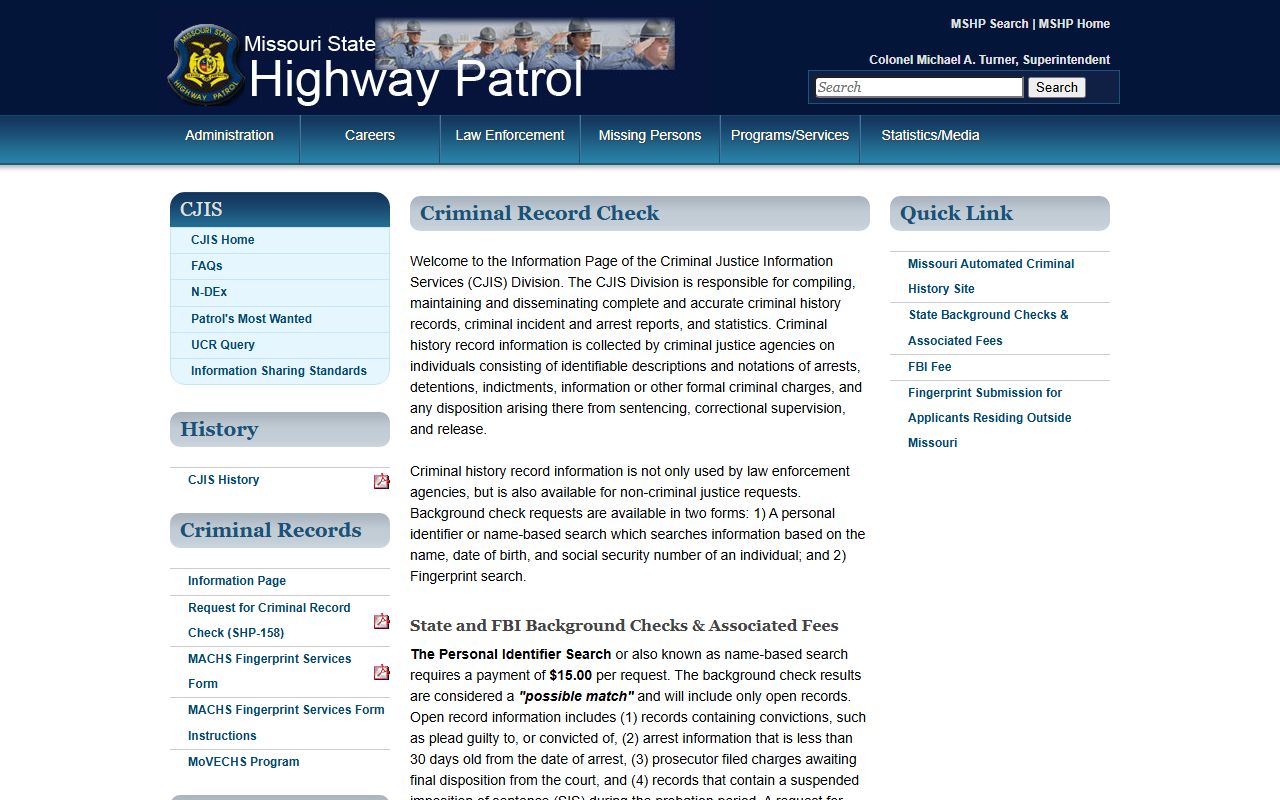
Use MSHP and MACHS for statewide criminal-history checks, but use Case.net and the Circuit Clerk for the Daviess County criminal case file.
Daviess County Charges vs Convictions
A charge is an accusation filed in court. A conviction is a final outcome based on a guilty plea or finding of guilt. Daviess County criminal court records can show charges that were dismissed, reduced, amended, or ended without conviction. Read each charge line with its disposition, not just the first charge text. A case may also have multiple counts with different outcomes. Some may be dismissed while another results in a plea or sentence. The disposition and sentence fields carry the legal outcome.
| Topic | Charge | Conviction |
|---|---|---|
| Meaning | A formal allegation filed by the prosecutor. | A guilt outcome by plea, trial verdict, or court finding. |
| Case Stage | Appears early after filing and may change during the case. | Appears after disposition and before or with sentencing. |
| Record Reading | Must be matched to plea, amendment, dismissal, or disposition. | Should be matched to sentence, costs, probation, and final judgment entries. |
| Public Meaning | Does not prove guilt by itself. | Reflects a criminal outcome unless later set aside, sealed, or expunged. |
Read Dispositions and Sentences
Disposition language is the key to a Daviess County criminal court record. Dismissed with prejudice generally means the charge cannot be refiled in the same way. Dismissed without prejudice means it may be refiled if legally allowed. A guilty plea or guilty finding supports a conviction unless later changed by court order or statute. Missouri records may also show SIS or SES language. SIS means suspended imposition of sentence, where sentence is not imposed if probation is completed. SES means suspended execution of sentence, where a sentence exists but execution is suspended during probation.
Sentencing entries can show jail, prison, probation, restitution, fines, court costs, payment plans, treatment conditions, community service, or revocation events. Do not treat a single docket entry as the whole outcome if later entries modify the case. A probation violation, revocation, warrant recall, amended charge, or corrected judgment can change the practical meaning of the record. For certified proof, ask the Circuit Clerk for the judgment, sentence, or docket-certified copy and confirm the current fee before payment.
Sealed vs Expunged Criminal Records
Sealed and expunged records are both outside ordinary public lookup, but they are not the same. A sealed Daviess County criminal court record is closed from ordinary public access by law or order. An expunged record under Missouri law is limited from public access after a statutory petition process, but some government use may still exist for legally permitted purposes. The research file did not locate a Daviess-specific expungement fee, form packet, or local filing guide, so petitioners should confirm current forms, service requirements, and costs with the Circuit Clerk or counsel.
| Topic | Sealed | Expunged |
|---|---|---|
| Public View | Closed from ordinary public access by law or court order. | Removed or limited from ordinary public view after statutory relief is granted. |
| Process | Depends on the case type, law, and court order. | Requires a petition and statutory findings under Missouri expungement law. |
| Agency Access | May remain available to certain courts or agencies as allowed by law. | May still be available for limited legally permitted government uses. |
| Local Contact | Ask the Circuit Clerk about access procedure, but not legal advice. | Confirm forms, filing fee, service, and eligibility with the Circuit Clerk or counsel. |
The Missouri expungement statute at RSMo 610.140 is assigned to this criminal records topic.
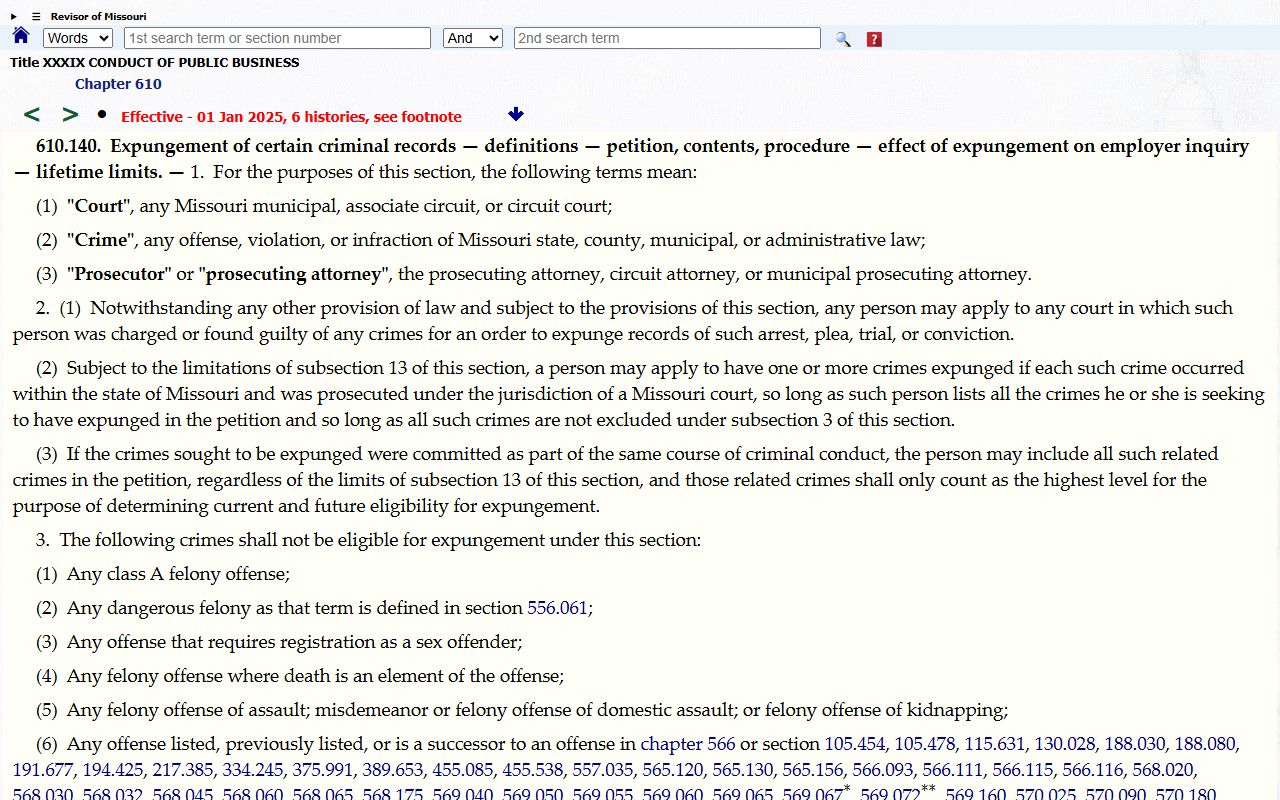
That statute is a statewide starting point. Daviess County filing details still need confirmation through the Circuit Clerk because local fee details were not found.
Daviess County Criminal Record Access
Public access to criminal court records is not the same as public access to sheriff arrest reports. Court records start with the circuit court case file. Law-enforcement records are handled through the sheriff or police under Missouri access rules. RSMo 610.100 addresses arrest, incident, and investigative record access, but it does not turn every criminal court filing into a public document. Juvenile, sealed, expunged, adoption, mental health, confidential address, minor, and sensitive identifier information remains restricted or redacted.
The Missouri arrest and incident record statute is assigned here because many users mix arrest records with Daviess County criminal court records.
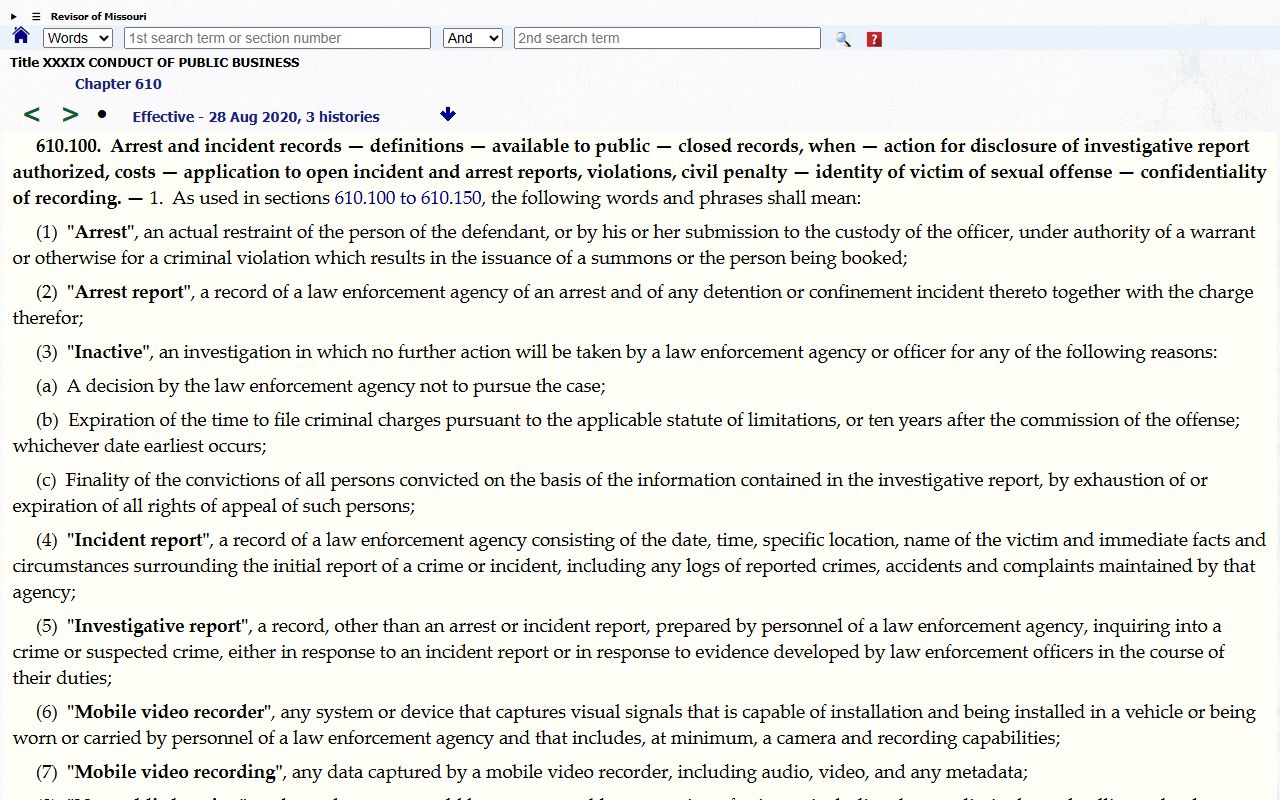
That distinction is practical: sheriff records may show the law-enforcement event, while the court record shows the filed case, plea, disposition, and sentence.
Note: Public criminal court records can show filed allegations, but only dispositions and judgments show final court outcomes.
MACHS and Court Files
The Missouri Automated Criminal History Site, or MACHS, is the statewide name-search route tied to Missouri State Highway Patrol criminal history checks. The MSHP page states the name-based open criminal history check has a fee of $15 plus a convenience fee. MACHS can be useful for statewide criminal-history screening, but it does not replace the local court file. For a Daviess County case, Case.net and the Circuit Clerk show the docket, filed charges, hearings, dispositions, and certified copy route. For custody status, use the Daviess/DeKalb Regional Jail roster or VINELink, not a court docket.
The MACHS portal is assigned to this page as the statewide criminal-history access channel.
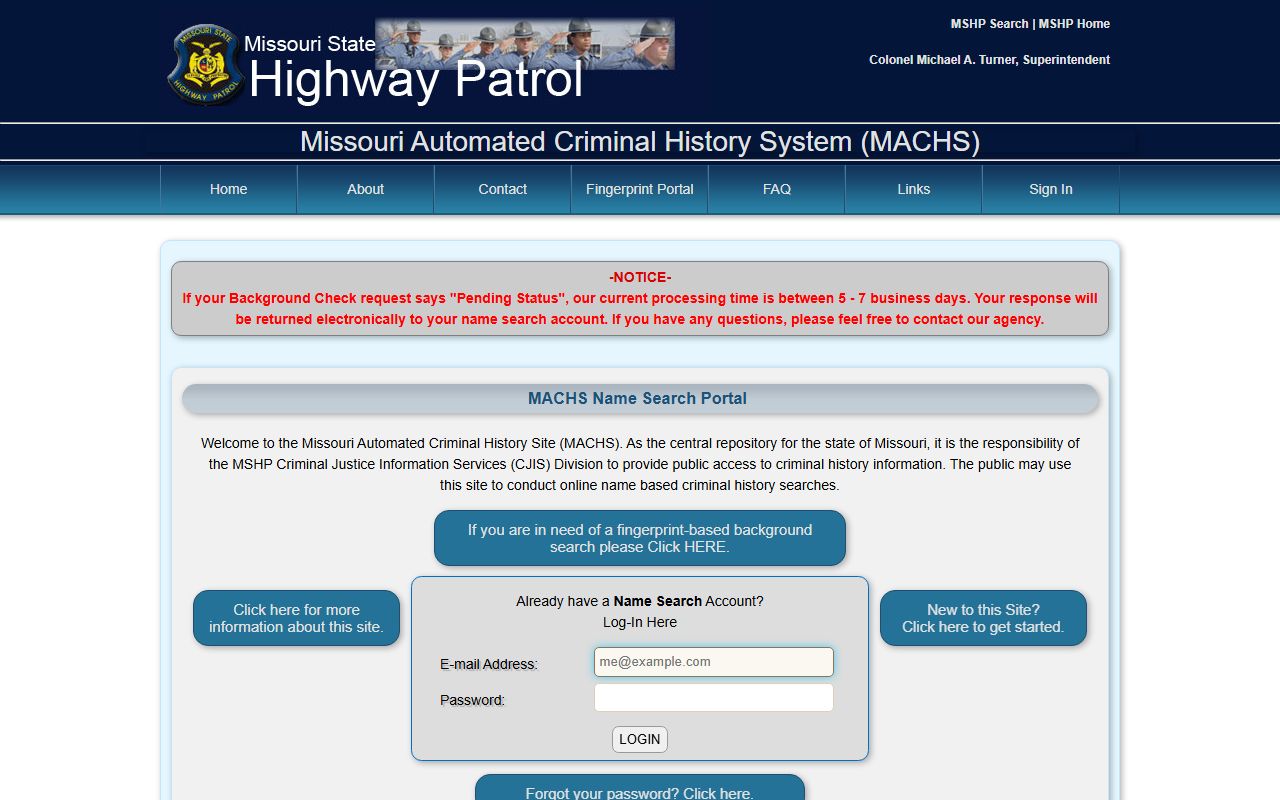
A MACHS result and a Daviess County criminal court record may overlap, but they answer different questions and come from different custodians.
Restricted Daviess County Criminal Records
Some Daviess County criminal record information is not public online. Juvenile records are restricted, and confidential juvenile files require court control and a legitimate-interest finding under Missouri law. Sealed and expunged matters are removed from ordinary public access. Some protective-order-related juvenile court records are confidential. Sensitive identifiers, financial account numbers, confidential addresses, minor information, medical details, mental health material, and sealed filings should be redacted or closed. If a search fails, the reason may be restriction, spelling, timing, another county, a municipal process, or an older file.
The local clerk channel is direct. Contact the Daviess County Circuit Clerk at 102 N Main St., Gallatin, MO 64640, 660-663-3300 ext. 2, or jennifer.hoppenthaler@courts.mo.gov for criminal court file questions, certified copies, older records, and fee confirmation. The research did not locate a Daviess-specific certified-copy fee schedule or public defender district office address. Public defender eligibility and appointed-counsel access should be handled through the Missouri State Public Defender system and the court process, not through private referral lists.